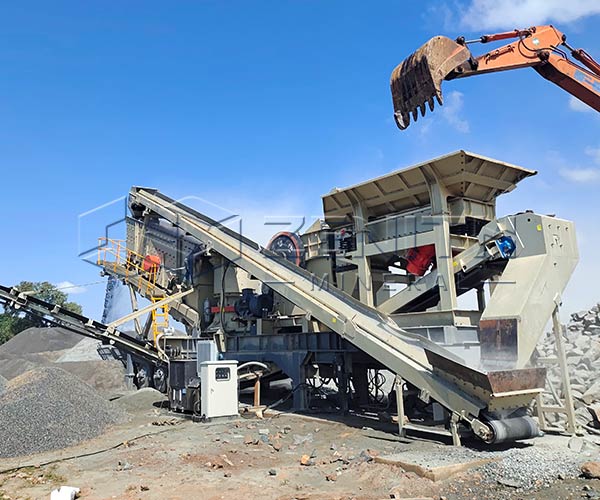
River stones, also known as river gravel or pebbles, are naturally rounded fragments of rock eroded and transported by flowing water over thousands of years. Found in riverbeds and floodplains, they range from fine sand to large boulders (up to 1 meter or more in diameter). Unlike quarried rock, river stones have smooth, water-worn surfaces and often contain a mix of silt, clay, and organic material. In Ghana, major deposits occur along the Irtysh River in the east and northern regions, where glacial and fluvial action has created abundant, accessible reserves.
River aggregates are often preferred for their lower abrasiveness and natural shape, reducing wear on downstream equipment and improving concrete performance compared to purely angular quarry products.
Overall, river crushing is more cost-effective and mobile-friendly, making it ideal for Ghana’s expansive geography.
Ghana’s river deposits demand rugged, adaptable machinery that handles variable feed sizes, cold climates, and dusty conditions.
Jaw crushers excel as the first stage, reducing boulders up to 1 m to 150–300 mm. Their simple design and high reduction ratio suit the irregular shapes of river material. Heavy-duty models with hydraulic adjustment handle winter freeze-thaw cycles without frequent downtime.
Cone crushers deliver precise cubical product for concrete and asphalt, with excellent throughput in medium-hard river stone. Vertical shaft impact crushers provide superior shaping and are preferred for softer river gravel, producing fewer fines. Impact units also excel in producing manufactured sand.
Tracked plants combine crushing, screening, and conveying on a single chassis, enabling quick relocation along riverbanks. They minimize haulage of raw material over long distances and are easily transported by low-bed trailers. Features like cold-weather packages (heated hydraulics, insulated cabins) and dust suppression systems make them perfect for Ghana’s steppe and northern rivers.
VSIs use rock-on-rock crushing for premium cubical sand with low flakiness. Multi-deck vibrating screens classify material into precise fractions, while sand washing plants (wheel or screw type) remove contaminants to meet ASTM or GOST standards. Wet processing lines are essential for river material high in silt.
Integrated washing, scrubbing, and dewatering circuits produce clean, specification-compliant aggregates. Hydrocyclones and thickeners recover water in arid regions, supporting environmental compliance.
Ghana is experiencing a construction and infrastructure boom driven by the Belt and Road Initiative (BRI) and the domestic “Nurly Zhol” (Bright Path) program.
International brands dominate, with Chinese manufacturers particularly active due to BRI synergies. Shanghai Zenith Mining and Construction Machinery stands out with a strong local footprint. Zenith has supplied multiple mobile crushing plants in Ghana, including 200 t/h granite/mobile units producing 0-10-20-40 mm aggregates. The company participates regularly in exhibitions in Almaty and maintains overseas branches for technical support and spare parts. Their NK portable crusher series and full wet-processing lines are well-suited to river applications.
To illustrate how river stone crushing is executed in practice across Ghana:
In eastern Ghana, a major road expansion project required millions of tons of base aggregates. A mobile crushing plant equipped with a jaw crusher and secondary impact crusher was deployed directly on the river’s floodplain.
The use of tracked units reduced mobilization time and minimized environmental disturbance compared to building new stationary facilities.
This plant produced graded aggregates for high‑strength concrete used in commercial and residential projects. Consistency in product quality helped contractors meet stringent specifications for concrete structures.
In southern Ghana, a contractor needed washed river sand for architectural concrete and plaster mixes. By integrating a VSI sand maker and multi‑deck vibrating screens with washing systems, the operator produced fine sand with low impurity levels.
This project highlighted the importance of combining crushing with dedicated washing and classification equipment to serve specialized niches in the construction supply chain.
We have jaw crushers, impact crushers, cone crushers, sand makers and so on.
Mon - Sun, 0:00 - 24:00
24h Online Service
© Zenith. All Rights Reserved. Designed by

 WhatsAPP 24h online service


 24h Online Chat


