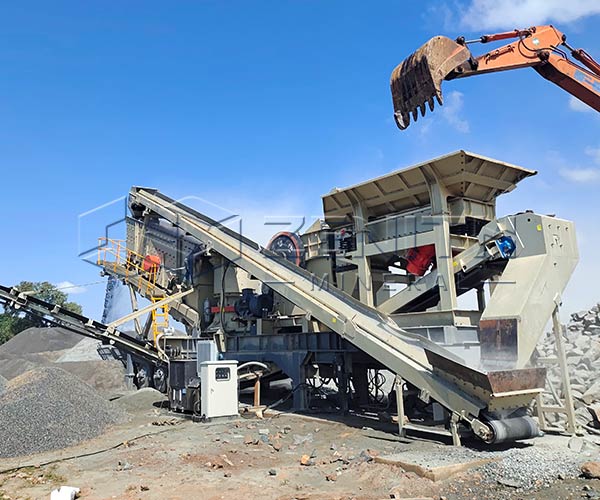
Why Stone Crushers Are Essential for Quarries
In modern quarrying operations, stone crushers are the backbone of material processing. These machines break down massive blocks of rock into usable aggregates for construction, road building, and industrial applications.
The Role of Stone Crushers in Crushing Stages
Crushing in a quarry typically happens in three stages—primary, secondary, and tertiary—each designed to handle different sizes and hardness levels of rock.
- Primary crushing is the first stage, handling the largest and hardest boulders directly from the quarry face. The goal is to reduce rocks to manageable sizes for further processing. Jaw crushers or gyratory crushers are usually deployed here.
- Secondary crushing reduces the material from the primary stage into smaller, more uniform pieces, often using cone or impact crushers.
- Tertiary crushing refines the material even further to achieve precise aggregate sizes or sand-like textures, often using vertical shaft impact (VSI) or cone crushers.
Each stage ensures that the output meets the required grain size, shape, and quality standards for various applications—from road base to ready-mix concrete.
Quarry-Specific Challenges
Operating in a quarry presents unique technical and logistical challenges. Crushers must handle:
- High-volume throughput: Some quarries process hundreds of tons per hour, requiring machines with consistent performance and reliable feeding systems.
- Hard and abrasive materials: Rocks such as granite, basalt, and limestone vary widely in hardness. Abrasive materials wear down crushers faster, so machines must use durable liners, wear plates, and high-strength alloys.
- Continuous 24/7 operation: Major producers often run their plants around the clock. Crushers must be engineered for minimal downtime and easy maintenance.
- Mobility demands: In expanding or multi-site quarries, portable or track-mounted crushers allow flexibility, reducing the cost of moving material over long distances.
Types of Stone Crushers Used in Quarries
Different types of crushers serve distinct roles in quarry production lines. Their selection depends on material hardness, required output size, production capacity, and budget.
- The jaw crusher is the workhorse of any quarry’s primary crushing stage. It uses a fixed and a moving jaw plate to compress rocks into smaller fragments.
- Applications: Primary crushing of hard, abrasive materials like granite, basalt, and limestone.
- Advantages: Simple structure, relatively low cost, easy maintenance, and high reduction ratio.
- Typical use: Almost every quarry starts with a jaw crusher due to its robustness and cost efficiency.
- Cone crushers are critical in secondary and tertiary stages, delivering high capacity and fine control over particle sizes. They use a rotating cone inside a fixed bowl to crush material through compression.
- Applications: Ideal for medium to very hard rocks; commonly used after the jaw crusher.
- Advantages: High production capacity, good particle shape, and long wear life.
- Cost: Higher investment than jaw crushers but lower cost per ton for well-run operations.
- Impact crushers work by striking material with brute force through rotating hammers or blow bars.
- Applications: Suitable for softer to medium-hard materials such as limestone, dolomite, or concrete recycling.
- Advantages: Excellent for producing well-shaped aggregates, adjustable final grain sizes, and simpler design for smaller setups.
- Considerations: Wear parts may degrade faster with very hard or abrasive rock types.
- Gyratory crushers resemble large cone crushers but are primarily for high-capacity primary crushing.
- Applications: Used in extremely large-scale operations handling thousands of tons per hour.
- Advantages: Exceptionally high throughput and consistent reduction ratios.
- Drawbacks: Very high investment and maintenance complexity; usually found in major mining or super-large quarry sites.
- Vertical Shaft Impact (VSI) crushers, also known as sand makers, use high-speed rotors to accelerate material and crush it against a stationary surface.
- Applications: Final stage for producing fine aggregates and sand, enhancing particle uniformity.
- Advantages: Improves aggregate shape, generates consistent fines, and is popular for making manufactured sand.
The choice between mobile and stationary setups impacts not just the initial cost, but also operational flexibility and long-term economics.
Stationary plants are fixed installations with large capacity, suitable for long-term projects near power supply and infrastructure. They offer lower cost per ton once installed but require significant civil work and planning.
Mobile plants mount crushers on tracks or wheels, allowing mobility between pits or jobs. While more expensive per ton of capacity, they save on hauling costs and are ideal for short-lived or remote operations.
Current Stone Crusher Machine Prices
Stone crusher prices vary widely based on capacity, configuration, and mobility. Below is an overview of typical cost ranges:
Small-Scale Crushers (20–100 TPH)
- These are compact machines suited for small quarries, pilot projects, or startup operations.
- Price range: Approximately $10,000 to $80,000.
- Common examples: Small jaw crushers ($15,000–$50,000), mini cone or impact units for local aggregate production.
Medium-Scale Crushers (100–250 TPH)
- Used in medium-sized quarries or regional-level production where demand is steady but not massive.
- Price range: $50,000–$150,000.
- Examples: Standard cone crushers, heavy-duty jaw crushers, or mid-size impactors.
Large-Scale Crushers (250+ TPH)
- These machines are designed for continuous industrial-scale production.
- Price range: $100,000–$500,000 and beyond.
- Examples: High-capacity cone or gyratory crushers.
- Use case: Aggregate producers serving major infrastructure and highway projects.
Mobile Crushers
- Mobility adds flexibility but also increases cost due to heavy-duty frames, tracks, and integrated hydraulic systems.
- Cost premium: Typically 20–30% higher than equivalent stationary units.
- Example: A 200 TPH mobile cone crusher may cost $180,000–$220,000, whereas a stationary one might be $140,000–$170,000.
Full Crushing Plants
- Complete crushing spreads include multiple crushers, feeders, screens, and conveyors.
- Price range: $100,000 to over $2.3 million, depending on capacity and automation level.
- Example: A 500 TPH fully automated plant with screening and dust suppression systems can reach the upper price range.
Price Comparison: Mobile vs Stationary Quarry Setups
When choosing between mobile and stationary systems, operators should weigh both capital and operational factors.
Initial Investment
Mobile setups require more upfront cost per ton of capacity (due to the additional mechanical complexity and transport features).
Stationary systems often demand cheaper machinery but higher costs for site development, concrete foundations, and electrical infrastructure.
Site Preparation and Civil Works
Stationary crushers require extensive site preparation—foundations, steel structures, and wiring—which can account for 20–30% of the project budget.
Mobile units largely skip these steps, needing only compacted ground and power/fuel supply, reducing installation time from months to days.
When to Choose Each Setup
Choose stationary if your quarry will operate for many years from one pit, with consistent demand and accessible raw materials. The lower long-term cost per ton justifies the initial civil investment.
Choose mobile if your project is short-term, if deposits are spread across multiple sites, or if logistics make haulage expensive. Mobility minimizes material handling distances and allows flexible deployment.
FAQ
1.What is the price of a stone crusher machine for a quarry?
The price can start from around the tens of thousands of dollars for small or basic units and go up to several hundred thousand dollars or more for large, high‑capacity, fully configured plants with multiple crushers and automation.
2.Why do stone crusher prices vary so much?
Prices vary because of machine type (jaw, cone, impact, gyratory), capacity, level of automation, brand, and whether you buy a single machine or a complete crushing line including feeders, screens, and conveyors.
3.Which type of stone crusher is best for a quarry?
For most quarries, a jaw crusher as primary combined with a cone or impact crusher as secondary is common, while very large operations may use a gyratory crusher as the main primary machine.
4.Is a mobile crusher more expensive than a stationary crusher?
Mobile crushers usually cost more to purchase because of the chassis and mobility features, but they can save money on transportation and offer flexibility for short‑term projects or multiple sites.
5.How much does it cost to set up a small stone crushing plant?
A small plant including primary crusher, screening, conveyors, and basic infrastructure can require a total investment of a few hundred thousand dollars, depending on capacity, country, and site conditions.

 WhatsAPP 24h online service


 24h Online Chat


