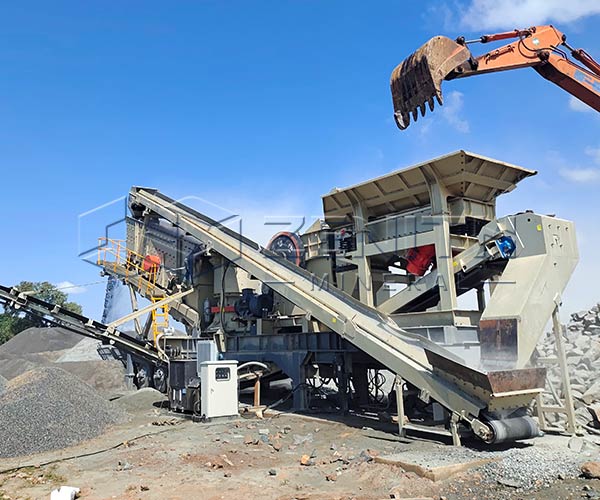
Granite crushing is a complex process due to the stone’s hardness, density, and abrasiveness. Selecting the right type of crusher—whether jaw, cone, impact, or VSI—is critical for achieving efficient production, maintaining equipment longevity, and meeting product specifications. Small, medium, and large-scale crushing operations each have their own requirements, and understanding the machinery and costs involved is essential for success.
Granite is an igneous rock composed primarily of quartz, feldspar, and mica. Its unique physical properties make it particularly challenging to crush, and understanding these characteristics is crucial for selecting the right equipment.
Because of its hardness, density, and abrasiveness, granite cannot be crushed efficiently using generic stone crushers.
Without specialized machines, crushing granite can result in poor particle shape, low output, and high operational costs.
Granite crushing typically involves multiple stages to reduce large blocks into usable aggregates. The main processes are:
The first step in the crushing process. Large granite blocks are fed into primary crushers, such as jaw crushers, which break them into smaller, more manageable pieces.
After primary crushing, the smaller pieces are fed into secondary crushers like cone or impact crushers to further reduce their size and produce more uniform particles.
In the final stage, crushers like VSI (Vertical Shaft Impact) machines or fine cone crushers refine the granite into sand or fine aggregates suitable for construction or decorative use.
Selecting the appropriate crusher type is crucial for efficient granite processing. Each machine serves a specific purpose, from primary crushing to shaping and fine crushing.
Jaw crushers are designed for heavy-duty primary crushing. They use compressive force to break large stones into smaller pieces.
Applications: Ideal for initial reduction of large granite blocks.
Advantages: High efficiency, simple structure, low maintenance.
Cone crushers use a rotating mantle inside a cone-shaped cavity to crush stones.
Applications: Suitable for secondary and tertiary crushing of granite.
Advantages: Produces finer particles with uniform shapes; can handle medium to hard granite.
Impact crushers utilize high-speed impact forces to break granite. They are excellent for shaping aggregates.
Applications: Producing construction aggregates, decorative gravel, or sand.
Advantages: Produces well-shaped particles; high reduction ratio.
Mobile crushers offer the advantage of mobility, allowing granite to be crushed directly at the quarry site or construction location.
Applications: On-site crushing in remote areas or projects with transportation limitations.
Advantages: Reduces material transport costs; flexible and fast setup.
Hammer Crusher: Suitable for medium hardness granite; used for secondary or tertiary crushing.
VSI (Vertical Shaft Impact) Crusher: Ideal for producing fine aggregates and sand with precise particle shapes.
The cost of stone crushers varies widely depending on capacity, technology, and automation. Here’s a general overview:
Designed for small plants or low-capacity projects. Usually includes a jaw crusher and optional secondary crushers.
Suitable for construction material suppliers and medium quarries. Can include multiple crusher types and moderate automation.
High-capacity crushing lines capable of processing hundreds of tons per hour. Often include full crushing and screening systems with automation and advanced control.
It’s important to consider not just the purchase cost but also operational costs, maintenance, and wear parts when budgeting for a granite crushing project.
Practical case studies provide insight into how different crushers perform under real conditions.
This small-scale plant efficiently crushes granite blocks for local construction projects. Maintenance costs are low due to the simple jaw-crusher design. The plant is ideal for contractors needing moderate production without large-scale investment.
The combination of impact and cone crushers produces high-quality, uniform granite chips suitable for concrete, road base, and landscaping. Productivity is high, and the particle shape meets industry standards.
This setup is ideal for commercial quarry operations. Automation and integrated screening systems maximize output while maintaining consistent product quality. The large-scale investment is justified by high throughput and reduced labor costs.
A: Prices vary based on type and capacity, typically ranging from $10,000 to over $150,000.
A: Yes, jaw crushers are ideal for primary crushing of hard rocks like granite.
A: Yes, mobile crushers are flexible and suitable for quarrying sites where granite needs to be processed on-site.
We have jaw crushers, impact crushers, cone crushers, sand makers and so on.
Mon - Sun, 0:00 - 24:00
24h Online Service
© Zenith. All Rights Reserved. Designed by

 WhatsAPP 24h online service


 24h Online Chat


