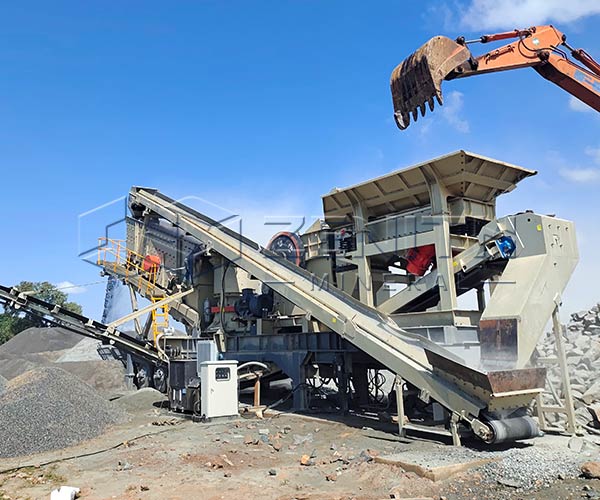
A complete 100 TPH crushing plant typically contains several coordinated machines designed to break large rocks into uniform aggregates. While layouts vary, the core components are:
Jaw crushers provide consistent feed sizes for secondary crushers and ensure smooth downstream operation.
Best suited for hard stone (granite, basalt, river stone).
Produces uniform, cubical aggregates with low wear cost.
Ideal for medium to soft stone (limestone, gypsum).
Delivers high reduction ratios and excellent particle shape.
Pricing for 100 TPH stone crushers varies based on manufacturer, region configuration, and features like automation or eco-friendly additions.
This includes a basic two-stage setup with jaw, cone/impact, screen, feeders, and conveyors. Advanced models with PLC controls or dust systems push toward the upper end.
Wheel-mounted options are more affordable ($130k-$250k), while track-mounted add $50k-$100k for mobility features. Prices from platforms like Alibaba show entry-level mobiles around $140k for basic configs.
For 100 TPH, focus on efficiency, maintenance, and energy use—aim for a 10-15% buffer in capacity to handle peaks.
Opt for a jaw + cone combination. The jaw handles initial compression of abrasive, high-compressive-strength rocks (over 200 MPa), while the cone provides fine reduction and cubical shapes. This setup minimizes wear and ensures durability; e.g., in quarries, it produces road aggregates effectively.
A jaw + impact crusher is ideal. The jaw crushes to intermediate sizes, and the impactor delivers high-quality, shaped products with fewer fines. This is energy-efficient for materials under 150 MPa, common in cement or fertilizer production, where cubical aggregates improve mix quality.
Choose a mobile impact crusher. These handle concrete, asphalt, or demolition waste, with features like magnetic separators for rebar removal. Mobility allows on-site processing, reducing transport costs; single-chassis units simplify setup for 100 TPH urban recycling projects.
Here are three practical configurations drawn from industry cases, illustrating versatility.
In a Chilean operation, a setup with a PE500x750 jaw crusher, CS75 cone crusher, 3-deck vibrating screen, and belt conveyors processes basalt at ~$160,000. It runs three stages for fine aggregates, producing 0-5mm sand and 5-20mm gravel for construction. Efficiency reaches 95% with low dust via water sprays.
A wheel-mounted unit in India features a jaw crusher + horizontal impact crusher on a single chassis, costing ~$190,000. Used in road projects, it handles soft limestone to produce 20-40mm chips, with quick relocation between sites enhancing ROI.
For urban demolition in the USA, a mobile impact crusher with integrated screen and magnet, priced at ~$250,000, crushes concrete rubble on-site. It outputs recycled aggregates for backfill, reducing landfill use and transport emissions.
We have jaw crushers, impact crushers, cone crushers, sand makers and so on.
Mon - Sun, 0:00 - 24:00
24h Online Service
© Zenith. All Rights Reserved. Designed by

 WhatsAPP 24h online service


 24h Online Chat


