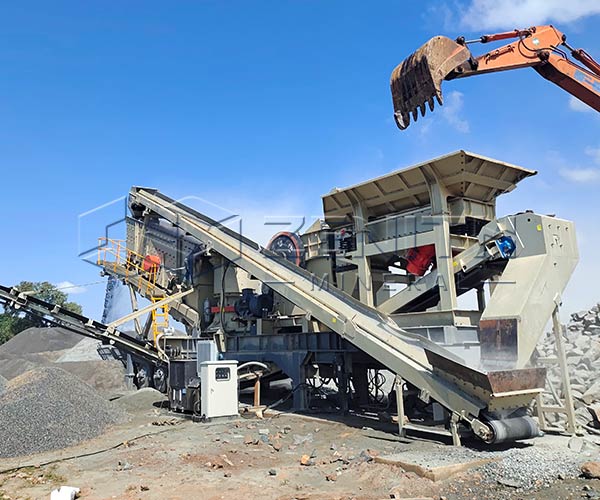
Nigeria’s construction industry is creating growing demand for high-quality sand and aggregate materials. Highway construction, expressway development, urban expansion, and large-scale infrastructure projects all require a stable supply of construction sand. However, limited natural river sand resources and increasing environmental restrictions have encouraged quarry operators and aggregate producers to explore manufactured sand production.
A modern sand crushing plant provides an effective solution by processing locally available materials such as river pebbles, limestone, granite, and basalt into valuable construction aggregates. Depending on the raw material and final product requirements, producers can select different combinations of jaw crushers, cone crushers, impact crushers, VSI sand makers, vibrating screens, and sand washing equipment.
This article introduces the most suitable sand crushing plant configurations for Nigeria, explains their main equipment and production processes, and provides practical guidance for selecting an efficient sand production solution.
Nigeria’s rapid infrastructure development is increasing demand for construction sand and aggregates. Traditional natural sand supplies alone may not be sufficient to meet the needs of large construction projects, creating opportunities for modern sand production plants.
Investing in a suitable sand production plant can therefore help Nigeriaese aggregate producers establish a more reliable supply of construction materials while improving operational efficiency.
Sand crushing plants can process different types of rocks, but the equipment configuration must match the hardness, abrasiveness, feed size, and physical characteristics of the raw materials.
The following materials are commonly considered for manufactured sand production in Nigeria.
River pebbles and gravel are common raw materials for manufactured sand production. Their hardness and rounded shapes require suitable crushing and shaping equipment to achieve the desired particle size and grading.
Recommended equipment: jaw crushers, cone crushers, VSI sand makers, and vibrating screens.
Main applications: concrete aggregates, construction sand, road materials, and general building applications.
Limestone is relatively easy to crush compared with granite and basalt. It is suitable for producing manufactured sand and various construction aggregates.
Recommended equipment: jaw crushers, impact crushers, VSI sand makers, and sand washing machines.
Main applications: concrete production, road construction, building materials, and cement-related applications.
Granite is a hard and abrasive rock that requires robust crushing equipment and appropriate wear-resistant components.
Recommended equipment: jaw crushers, hydraulic cone crushers, VSI sand makers, and vibrating screens.
Main applications: high-quality concrete aggregates, road construction, and manufactured sand.
Basalt has high hardness and abrasion resistance, making equipment durability and wear-part management particularly important.
Recommended equipment: heavy-duty jaw crushers, multi-cylinder hydraulic cone crushers, VSI sand makers, and screening equipment.
Main applications: highway construction, railway projects, concrete aggregates, and other demanding infrastructure applications.
Quartzite and other construction rocks can also be processed into manufactured sand after evaluating their physical and mechanical properties. Laboratory testing and crushing trials help determine whether a particular material is economically suitable.
Different raw materials require different crushing processes. The following five configurations cover common sand production requirements in Nigeria.
Suitable materials: River pebbles, river gravel, and rounded stones.
River pebbles are relatively hard materials that often require multi-stage crushing and shaping to produce high-quality manufactured sand.
Recommended equipment:Vibrating feeder, jaw crusher, cone crusher, VSI sand maker, vibrating screen, and sand washing machine.
Production process:Feeding → Primary crushing → Secondary crushing → Sand shaping → Screening → Washing.
The vibrating feeder delivers raw river pebbles into the jaw crusher for initial size reduction. The cone crusher then performs secondary crushing, while the VSI sand maker further reduces particle size and improves particle shape.
The vibrating screen separates finished aggregates according to different size requirements. Oversized materials can return to the crushing stage, while the sand washing machine removes clay, dust, and other impurities.
Suitable materials: Limestone and other relatively soft sedimentary rocks.
Limestone is easier to crush than many hard rocks, making it suitable for flexible and large-scale sand production.
Recommended equipment:Vibrating feeder, jaw crusher, impact crusher, VSI crusher, vibrating screen, and sand washer.
Production process:Feeding → Primary crushing → Impact crushing → Shaping → Screening → Washing.
The jaw crusher first reduces large limestone blocks to a manageable size. An impact crusher performs secondary crushing, producing smaller particles with relatively good shape.
If the final product requires finer sand or improved particle characteristics, a VSI crusher can be installed as an additional shaping stage. The vibrating screen separates the finished products, and the sand washer removes unwanted impurities.
Suitable materials:Granite and other hard, abrasive rocks.
Granite requires a stronger crushing system because of its high hardness and abrasiveness. A multi-stage crushing configuration helps balance production capacity, product quality, and equipment wear.
Recommended equipment:Vibrating feeder, jaw crusher, hydraulic cone crusher, VSI sand maker, vibrating screen, and sand washing equipment.
Production process:Primary jaw crushing → Secondary cone crushing → Fine crushing and shaping → Screening → Washing.
The jaw crusher handles large granite feed materials during primary crushing. The hydraulic cone crusher then performs secondary or tertiary size reduction.
Afterward, the VSI sand maker processes suitable feed materials into finer manufactured sand and improves particle shape. The vibrating screen separates the final products, while washing equipment helps control the cleanliness of the sand.
Suitable materials:Basalt and other high-hardness volcanic rocks.
Basalt is a highly abrasive material, so the crushing line should prioritize equipment durability, wear resistance, and stable operation.
Recommended equipment:Vibrating feeder, jaw crusher, multi-cylinder hydraulic cone crusher, VSI crusher, and vibrating screen.
Production process:Primary crushing → Secondary crushing → Tertiary crushing → Shaping → Screening.
Large basalt blocks are first processed by a jaw crusher. A multi-cylinder hydraulic cone crusher then reduces the material further, preparing it for fine crushing and shaping.
The VSI crusher produces manufactured sand and helps improve particle shape. The vibrating screen separates different aggregate sizes, and oversized particles can be returned for further processing.
Mobile sand crushing plants are suitable for producers who need flexible operations across different quarry locations or construction sites.
Suitable materials: River gravel, limestone, granite, basalt, and other construction rocks, depending on the selected configuration.
Recommended equipment:Mobile jaw crusher, mobile cone or impact crusher, mobile screening unit, and optional mobile VSI unit.
A typical mobile production process involves primary crushing, secondary crushing, optional sand shaping, and screening. Individual mobile units can be combined according to the raw material and final product requirements.
Before purchasing a mobile plant, operators should evaluate available working space, power supply, transportation conditions, maintenance access, and the required manufactured sand quality.
Selecting a reliable equipment supplier is important for establishing a stable and efficient sand production plant. SBM provides crushing, sand-making, screening, and material-handling equipment for different aggregate production requirements.
Its solutions can be configured according to the characteristics of local raw materials and the production objectives of Nigeriaese quarry operators.
SBM provides integrated production solutions covering feeding, primary crushing, secondary crushing, sand making, screening, and washing. This allows customers to plan the entire production process rather than purchasing individual machines without considering system compatibility.
Different projects have different site conditions. Stationary plants are suitable for long-term quarry operations and large-scale production, while mobile crushing plants offer greater flexibility for temporary projects and multiple working locations.
4. Integrated Screening and Washing Equipment
SBM solutions can incorporate vibrating screens, sand washing machines, dewatering screens, and belt conveyors to improve material separation, product cleanliness, and overall processing efficiency.
River pebbles, limestone, granite, and basalt have different crushing characteristics. SBM can develop equipment configurations based on raw material properties, feed size, required capacity, and finished product specifications.
Proper plant design involves more than selecting crushers. Technical consultation, installation guidance, equipment commissioning, and after-sales support are also important considerations when developing a complete production line.
If you are planning to build or upgrade a sand crushing plant in Nigeria, contact SBM with your raw material type, required production capacity, and finished product specifications. Its technical team can evaluate your requirements and recommend a suitable sand production solution.
Choosing the right sand crushing plant depends primarily on the raw material, production capacity, finished product requirements, and project operating conditions.
For most manufactured sand production projects, VSI sand makers, vibrating screens, and washing systems play important roles in controlling particle shape, grading, and cleanliness.
By selecting properly matched equipment and designing an integrated production process, Nigeriaese quarry operators can improve production efficiency, make better use of local rock resources, and develop a more stable supply of construction aggregates.
Yes. VSI crushers are suitable for shaping hard-rock materials and producing manufactured sand. However, the upstream crushing stages should reduce the feed size to the VSI machine’s specified range. Wear-part selection is particularly important when processing granite and basalt.
Sand crushing plants can be configured for different capacities, including 50, 100, 150, 200, and 300+ TPH. Actual output depends on material hardness, feed size, equipment configuration, and required product grading.
The price varies according to production capacity, raw material, crusher types, automation level, and washing system configuration. Mobile plants may also have different costs from stationary production lines. Investors should compare the complete project cost, including transportation, installation, power supply, and maintenance.
Consider the supplier’s equipment manufacturing experience, technical expertise, plant design capabilities, product quality, spare parts availability, installation services, and after-sales support. It is also important to request a customized equipment proposal based on your raw material and production targets.
We have jaw crushers, impact crushers, cone crushers, sand makers and so on.
Mon - Sun, 0:00 - 24:00
24h Online Service
© Zenith. All Rights Reserved. Designed by

 WhatsAPP 24h online service


 24h Online Chat


