Kazakhstan has entered a phase of sustained infrastructure development, driven by government initiatives and regional economic integration. Large-scale projects such as highways under the “Nurly Zhol” program, railway modernization, and urban housing expansion have significantly increased demand for high-quality aggregates.
These regions require consistent supplies of crushed stone for concrete, asphalt, and road base layers.
As natural sand resources become restricted due to environmental regulations, the importance of manufactured sand (M-sand) from river stone is also increasing. This further boosts demand for advanced crushing and sand-making solutions.
River stone presents unique challenges and opportunities in crushing operations. Its physical and mechanical properties directly influence equipment selection and plant design.
Impact crushers, while effective for softer materials like limestone, tend to experience rapid wear when processing river stone, leading to higher downtime and maintenance expenses.
In Kazakhstan, where natural sand availability is limited in certain regions, VSI-based sand production has become an essential component of modern crushing lines.
Effective configurations balance capacity, material properties, product quality, and operational flexibility.
Ideal for small-to-medium quarries and local construction suppliers.
Flow: Vibrating feeder → Jaw crusher (primary) → Cone crusher (secondary) → Vibrating screens (multi-deck) → Conveyors → Stockpiles.
Output: Various fractions (0-5 mm, 5-20 mm, 20-40 mm) for concrete and road base.
Low initial investment, simple operation, suitable for remote sites. This setup processes river stone efficiently, with the cone crusher handling the hardness for good cubicity. Perfect for supplying local housing and small infrastructure projects in regions like Shymkent or Karaganda.
Designed for large-scale projects, highway construction, and commercial concrete plants.
Flow: Vibrating feeder → Jaw crusher → Multi-stage cone crushers (e.g., standard + short head) → VSI sand maker → Vibrating screens → Sand washer → Dewatering screens.
Output: High-quality aggregates plus manufactured sand, meeting stringent specifications for asphalt and premium concrete.
Maximizes resource utilization from river stone. Multi-stage cones provide excellent reduction and shape. VSI ensures sand quality. This configuration supports major national projects, offering higher profitability through diversified products.
Why cone crushers are preferred for hard river stone in Kazakhstan:
Their compression action handles high abrasion better than impact, resulting in lower spare parts consumption and more stable operation in remote locations. They produce less dust and flatter particles compared to some alternatives, aligning with quality demands for infrastructure durability in extreme climates.
Increasingly popular for flexibility.
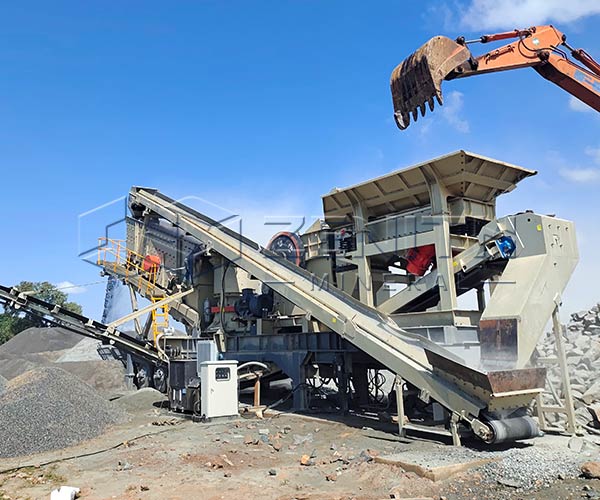
Units: Mobile jaw crusher + Mobile cone crusher + Mobile screen + Conveyors (often track-mounted).
Applications: Multiple riverbank or quarry sites, remote infrastructure projects, or seasonal operations.
Quick relocation, reduced setup time, lower permitting hurdles. Ideal for Kazakhstan’s vast territory and varying project locations. Modern mobile plants incorporate dust control and efficient power systems suitable for diesel or hybrid operation.
A representative example of successful implementation is a 150 t/h river stone crushing plant located in the Almaty region.
This case demonstrates how properly designed crushing systems can effectively handle Kazakhstan’s river stone resources while meeting the growing demand for aggregates.
A river stone crushing line is a complete system used to crush river rocks into different sizes of aggregates for construction and infrastructure projects.
The ideal capacity depends on market demand and project scale. Common capacities include 100 TPH, 200 TPH, and 300 TPH crushing plants.
Yes. River stone has high hardness and silica content, which increases wear on crushing equipment.
Yes. River stone can be processed by VSI sand makers to produce high-quality manufactured sand.
Stationary plants are better for long-term large-scale production, while mobile plants are ideal for flexible or temporary projects.
We have jaw crushers, impact crushers, cone crushers, sand makers and so on.
Mon - Sun, 0:00 - 24:00
24h Online Service
© Zenith. All Rights Reserved. Designed by

 WhatsAPP 24h online service


 24h Online Chat


